
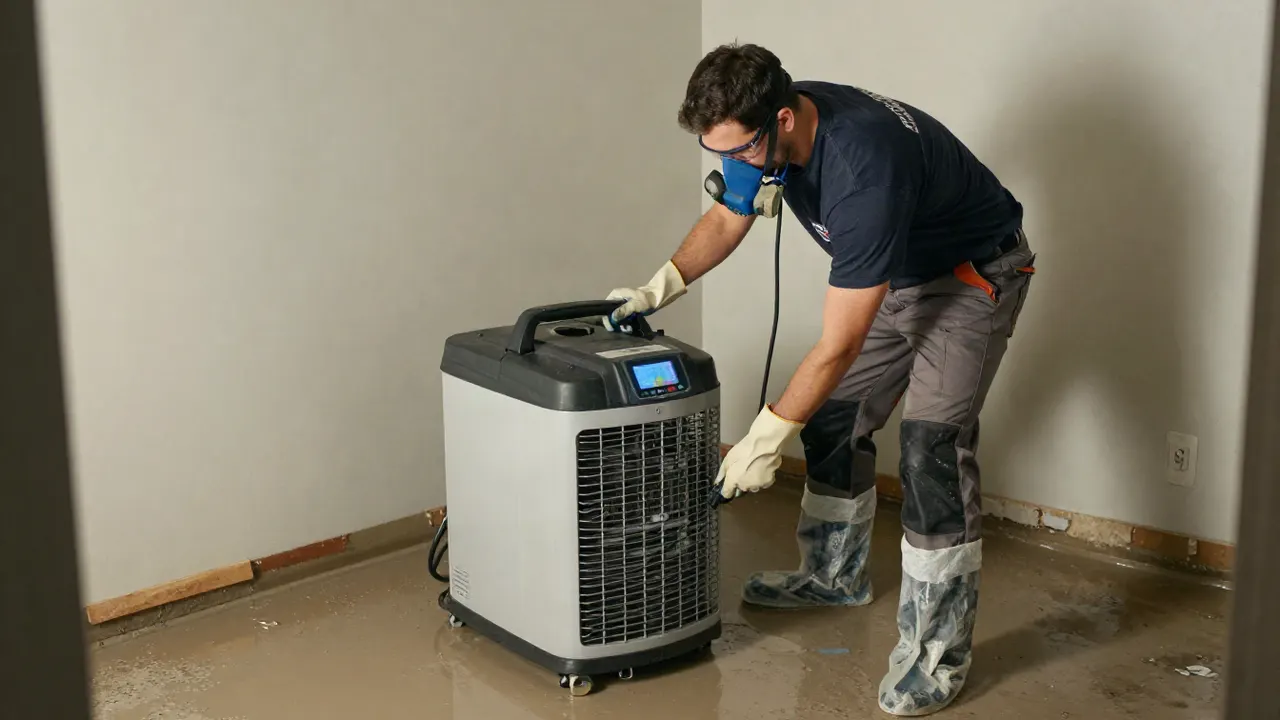
Moisture mapping
Thermal imaging and moisture meter readings on every affected surface, so we know exactly where the water went and where the equipment needs to go.
Every job includes the assessment, the equipment, the daily monitoring and the final documentation. If mold is present, we scope the treatment separately so you know what you are paying for and why.
Thermal imaging and moisture meter readings on every affected surface, so we know exactly where the water went and where the equipment needs to go.
Refrigerant or desiccant units sized to the job, set and adjusted daily based on readings rather than left in one spot for the duration.
Positioned to keep wet surfaces evaporating so the dehumidifiers can pull that moisture out of the air. Placement changes as the job progresses.
We return each day to take readings, adjust equipment and check for any area drying slower than the rest. You get a progress update each visit.
Applied to affected framing and cavities to knock down mold spores that landed before drying started. Included when the assessment shows biological growth risk.
A documented record of before-and-after readings and equipment used, formatted for your insurance adjuster and for your own records.
Dehumidification Littleton CO is the controlled removal of water vapor from building materials and indoor air after a leak, flood or long-running humidity problem. It is not a box fan in the corner. We set commercial-grade refrigerant and desiccant dehumidifiers, pair them with air movers to keep the wet surface evaporating, and track the whole job with a moisture meter and hygrometer. The goal is to bring framing, drywall and subfloor back to a normal moisture content before mold has a chance to colonize.
Littleton homes run into this more than most people expect. Front Range weather swings hard, and older housing stock near Historic Downtown Littleton has crawl spaces and finished basements that trap damp air for weeks. A slow foundation seepage or a washing machine supply line that lets go overnight can push indoor humidity past 70 percent without a single visible puddle. That is when a moisture removal service Littleton homeowners trust matters more than a shop vac and a prayer.
Every job follows the same measured sequence, whether it is one wet room or a whole basement. Here is what you will see from the first call to the final reading.
Schedule
Call or book online — a real human picks up and confirms a 2-hour arrival window.
Diagnose
Licensed tech inspects on-site, then walks you through the cause and your options.
Fix
The job is completed to code and done right the first time — no shortcuts, no surprises.
Guarantee
Every job backed by a written workmanship warranty — and we stand behind it.
Dri-Eaz and Phoenix dehumidifiers
Commercial refrigerant and desiccant units sized to the job, used to pull water vapor out of the air and keep the drying process moving.
Truck-mounted water extractor
Pulls large volumes of standing water fast, before dehumidification begins, so the drying equipment is not fighting a puddle.
Thermal imaging camera
Finds hidden moisture behind walls and under floors without tearing anything open, so equipment goes exactly where it is needed.
Moisture meter and hygrometer
Measures moisture content in materials and relative humidity in the air, giving us the numbers that drive every drying decision.
Bore scope
Lets us look inside wall cavities and behind baseboards to confirm whether a space is dry or still holding moisture.
HEPA vacuum and ozone generator
Used when mold or odor is present, to clean the air and treat the space before the final drying verification.
IICRC S500 drying standard
The industry standard for water damage restoration, covering how to assess, dry and document a structure. We follow it on every job so the work is consistent and defensible to insurers.
Psychrometric drying plan
We calculate the target humidity and equipment count based on the cubic footage and materials wet, rather than guessing. The plan is adjusted daily as readings come in.
Containment with polyethylene sheeting
When mold is present or the affected area is large, we set containment to keep spores and dust from spreading to clean parts of the home during drying and treatment.
Antimicrobial application
Fiberlock antimicrobial solution is applied to affected framing and cavities to knock down mold spores that landed before drying started, reducing the chance of regrowth.
01
What we do: We extract the standing water, open the ceiling cavity where needed, and set dehumidifiers and air movers to dry the framing and drywall from both sides. Daily readings track progress until the cavity matches dry-standard.
→ The ceiling and wall dry in place, and the finished basement is back in use in under a week without a full tear-out.
02
What we do: We locate the leak with thermal imaging, stop the water, and run dehumidification to pull moisture out of the slab and flooring. A hygrometer tracks the room humidity daily.
→ Humidity drops from the high 70s to the 40s, the tile stays in place, and the room stops feeling damp.
03
What we do: We remove standing water, set dehumidifiers sized for the crawl space volume, and treat the joists and insulation with an antimicrobial solution where growth risk is present.
→ The crawl space dries to a stable humidity level and the musty smell that had been drifting into the house goes away.
04
What we do: We extract the water, remove wet baseboard where needed, and dry the wall cavity with targeted air movement and dehumidification. Readings are logged daily.
→ The closet and adjacent room dry without mold growth, and the replacement water heater goes in on schedule.
Littleton sits on the Front Range, which means dry winters, wet springs and summer storms that can drop an inch of rain in an hour. That pattern drives two very different kinds of moisture calls. The first is event-driven: a burst pipe, a slab leak, a sewage backup or a roof leak during a storm. The second is chronic: foundation seepage, crawl space damp and basement humidity that climbs every spring. Older homes near Historic Downtown Littleton often have crawl spaces and finished basements that hold moisture longer than newer construction, and that shapes how we set equipment. We plan for longer drying times in those homes and check wall cavities with a bore scope before calling a job done. If you are searching for a professional moisture removal service in Littleton, Colorado after a storm, we can be on site the same day and have equipment running within hours. We also handle industrial dehumidification Littleton CO 24/7 for larger commercial losses.
Historic Downtown Littleton
Older housing stock with crawl spaces and finished basements that trap moisture. Drying plans here often run a day or two longer than newer construction.
Downtown Littleton
A mix of homes and small commercial spaces. We handle both, and commercial losses often need after-hours drying so the business can stay open.
80123 corridor
Residential neighborhoods with a high share of finished basements. Basement dehumidification jobs here are common after spring storms and appliance failures.
80122 and 80128
Suburban homes where foundation seepage and crawl space damp show up most. We map the source first, then dry, so the fix addresses the cause.
Spring snowmelt and heavy rain
Saturated soil pushes water against foundations, and crawl spaces take on moisture. Drying jobs in April and May often need extra days to bring framing down to dry-standard.
Dry winter air with indoor heating
Heating dries the air fast, which can mask a wet wall cavity. We rely on moisture meter readings rather than how the room feels, so hidden moisture does not get missed.
Older plumbing in pre-1980 homes
Supply lines and fittings in older Littleton homes fail more often. When they do, water can travel further before it is noticed, which means larger drying scopes.
Most water damage calls come down to a handful of causes. Here is what we see in Littleton and how drying fixes the underlying problem, not just the wet spot.
Problem
A recurring musty odor usually means hidden moisture in a crawl space or wall cavity feeding mold growth. Ignoring it lets the growth spread and can affect indoor air quality for everyone in the house.
Our Fix
We locate the moisture source with thermal imaging and a bore scope, dry the cavity with targeted dehumidification, and treat affected framing with an antimicrobial solution. The smell goes away because the moisture that caused it is gone.
Problem
High basement humidity warps stored items, rusts tools and creates the conditions for mold on joists and insulation. It also makes the whole house feel damp in summer.
Our Fix
Basement dehumidification Littleton service brings the space down to 30 to 50 percent relative humidity and holds it there through the drying period. We also advise on a standalone unit to maintain the level afterward.
Problem
A dishwasher or washing machine leak can soak the subfloor under tile or vinyl without showing much on the surface. Left wet, the subfloor delaminates and the finish above it fails.
Our Fix
We extract the standing water, then dry the subfloor in place with air movers and dehumidifiers, checking moisture content daily. Most subfloors dry without removal if we get to them within the first few days.
Problem
Storm water carries silt and contaminants and soaks into drywall, insulation and carpet padding. The longer it sits, the more material has to be removed and replaced.
Our Fix
We extract, remove unsalvageable material, and run a full dehumidification setup with daily monitoring. Documentation is logged from day one so your insurance claim reflects the actual scope of the work.
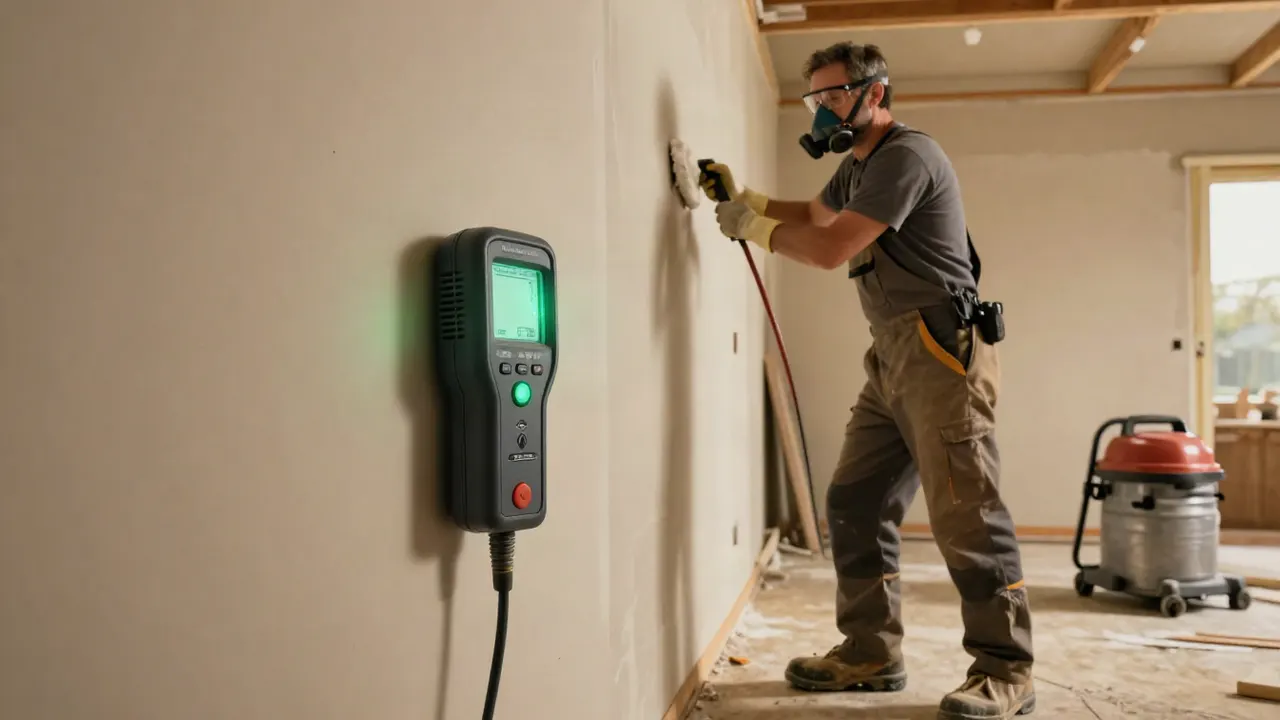
Water damage is a clock problem. The longer framing stays wet, the more of your house has to come out. Here is what a proper drying setup buys you.
Stops mold early
Mold can start colonizing wet drywall and insulation within 24 to 48 hours. We bring humidity down fast enough to close that window, and we treat affected framing with an antimicrobial solution so spores that already landed do not get a foothold.
Saves the finishes
A wet subfloor or baseboard does not have to become a demolition project. By drying in place with air movers and dehumidifiers, we routinely save hardwood, trim and cabinetry that would otherwise be torn out and replaced at three to five times the cost.
Lowers the humidity for good
Basement dehumidification Littleton jobs are as much about the weeks after the leak as the leak itself. We target 30 to 50 percent relative humidity so the space stops feeding mold and stops smelling like a damp basement every time it rains.
Gives you documentation
We log moisture readings room by room, before and after. That record is what your insurer needs to approve a claim, and it is what proves the structure was actually dry when we packed up the equipment.
Google ★★★★★4.9
Called after a pipe burst in our basement. They were out the same day, set up dehumidifiers and air movers, and came back every day to check readings. Four days later the basement was dry and we did not have to replace the drywall. Straightforward pricing and no surprises.
Yelp ★★★★★4.8
We had a musty smell in the crawl space for two years and two other companies just wanted to sell us a sump pump. This crew actually measured the moisture, found the source, and dried it out. The smell is gone and the readings prove it.
BBB ★★★★★4.9
Professional from the first call. They explained what dehumidification actually does, gave us a written scope, and documented everything for our insurance claim. The adjuster said it was the cleanest drying report they had seen in a while.
Our technicians hold IICRC WRT (Water Restoration Technician) and IICRC ASD (Applied Structural Drying) credentials, which means they understand psychrometrics, not just how to plug in a fan. We have been drying Littleton structures since 2024, and in that time we have worked everything from a single wet bathroom to full basement floods after a storm. We follow the IICRC S500 standard for water damage, use calibrated moisture meters and thermal imaging on every job, and document readings so the work is verifiable. When a job needs mold remediation, our IICRC AMRT training guides the containment and treatment plan.
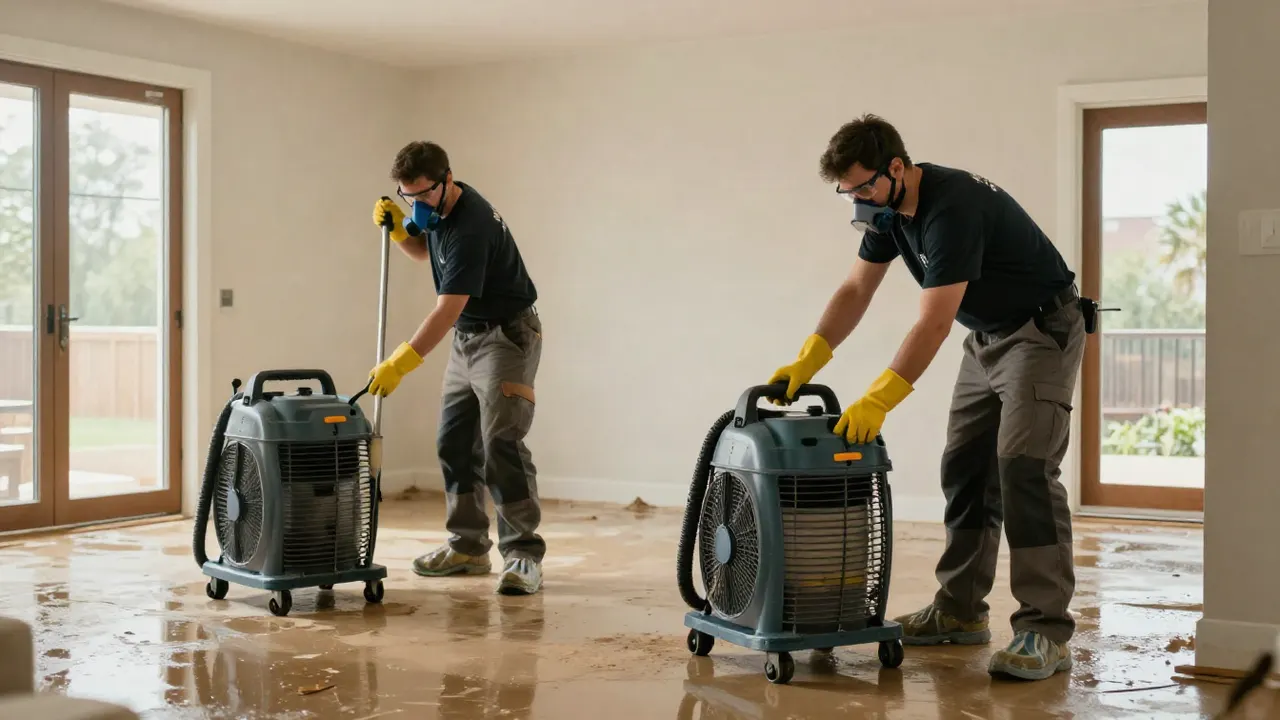
Real experiences from customers who chose our Dehumidification services.
“A supply line under our kitchen sink let go while we were at work. The team was out the same afternoon, pulled the water out and set dehumidifiers and air movers. They came back every day for four days and showed me the moisture readings each time. The cabinet and subfloor dried without having to tear anything out.”
Megan R.
Homeowner, Historic Downtown Littleton
“Our basement smelled musty every spring and we could not figure out why. They found a slow seepage at the foundation and ran dehumidification for almost a week. Humidity went from the high 70s down to the 40s and the smell is gone. They also told me what to watch for so it does not come back.”
Dave K.
Homeowner, 80123
“We had a slab leak in one of our units and needed the drying documented for insurance. The crew logged readings every day and gave us a clean report the adjuster accepted without pushback. Equipment was pulled exactly when the numbers said it was dry, not a day later.”
Priya S.
Property Manager, Downtown Littleton
Real answers to the questions we hear most often from local homeowners and property managers.
Extraction comes before dehumidification. We pull standing water with a truck-mounted extractor so the drying equipment can do its job instead of fighting a puddle. If your basement is holding water right now, this is the first call.
View Emergency Water ExtractionWater removal covers the full pull-out from carpet, padding and hard surfaces. Once the bulk water is gone, we move straight into dehumidification Littleton CO setup so the structure dries from the inside out rather than staying damp under the surface.
View Water RemovalStructural drying is the larger umbrella that includes dehumidification. We combine air movers, dehumidifiers and daily moisture readings to bring framing, drywall and subfloor back to dry-standard, with documentation your insurer can review.
View Structural DryingNot sure how far the water traveled? Our inspection uses thermal imaging and moisture meters to find hidden wet spots behind walls and under floors. That map tells us exactly where to place dehumidification equipment for the fastest, most complete dry.
View Water Damage InspectionIf you have water where it should not be, call us. Our line is answered 24/7, and most Littleton addresses see a crew within 60 to 90 minutes. We serve Downtown Littleton, Historic Downtown Littleton and the surrounding ZIPs, and we give you a written scope before work starts.
Phone
112233445Address
6900 S Potomac St #200, Centennial, CO 80112, Littleton, Colorado
Hours
Mon–Fri: 7AM – 7PM
Sat: 8AM – 4PM
Sun: Emergency Only
24/7 Emergency Available