
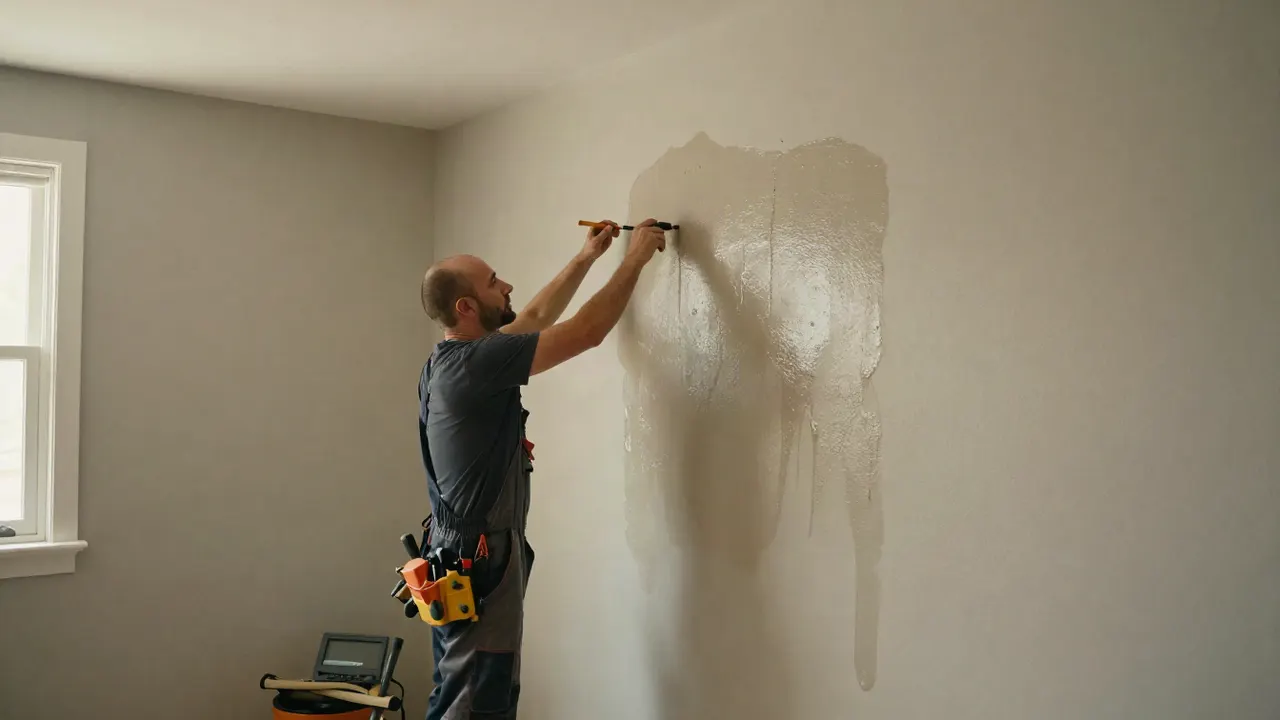
A wet basement wall after rain in Littleton is almost always caused by hydrostatic pressure pushing groundwater against your foundation, combined with a failure in the waterproofing system - a crack, a compromised footing drain, or porous block. The water has to go somewhere, and the path of least resistance is usually through the wall itself. Below we break down the five causes we see most often in Littleton homes, how to tell seepage from a structural problem, and what to do in the first 24 hours before mold sets in.
The short answer: why Littleton basements get wet after rain
Basement water seepage in Littleton CO is a pressure problem, not a wall problem. When the ground around your foundation saturates faster than it can drain, water pushes against the wall from the outside. Concrete is porous at a microscopic level, and block foundations are worse - mortar joints act like wicks. Add a hairline crack from settling and you have a wet wall within hours of a heavy storm.
Littleton sits on clay-heavy soils along the South Platte corridor, and clay does not drain. It holds water like a sponge and expands as it does. That expansion is what drives water through foundation walls even when the wall looks solid from the inside.
The five causes we find most often in Littleton homes
After thousands of inspections across the metro, these five causes account for nearly every wet basement wall we see in Littleton.
1. Hydrostatic pressure and poor grading
Water pools against the foundation when the soil slopes toward the house instead of away from it. We look for the telltale sign: a visible water line on the wall that's higher on one side. Regrading the soil to a 6-inch drop over the first 10 feet is often the cheapest fix you'll ever make.
2. Foundation cracks and cold joints
Hairline cracks in poured concrete and the cold joint where the wall meets the footing are the two most common entry points. A crack 1/16 inch wide - about the thickness of a credit card - can let in several gallons of water during a storm.
3. Failed or clogged footing drains
Most Littleton homes built before 1990 have clay-tile or early PVC footing drains that have collapsed or silted shut. When the drain fails, water has nowhere to go but against the wall.
4. Porous block and mortar joints
Concrete block foundations are common in mid-century Littleton neighborhoods. Block is hollow, and water moves through the mortar and the block cores. You'll often see efflorescence - the white chalky powder - as the water evaporates and leaves minerals behind.
5. Window wells and penetrations
Window wells without covers fill up fast during a Front Range hailstorm. So do the penetrations where utility lines, dryer vents, and hose bibs enter the wall. These are small fixes that get missed.
Why is my basement wall wet after it rains in Littleton CO specifically?
Littleton's soil and storm patterns make basement seepage more likely here than in many Front Range cities. The Denver Formation clay under much of the city has very low permeability, so water from a 30-minute downpour has nowhere to go but sideways into your foundation.
We also see a specific pattern in older neighborhoods: homes built in the 1950s and 1960s with original footing drains that have long since failed, plus mature landscaping that has raised the soil grade against the house over decades. That combination is why wet basement walls in Littleton, Colorado show up most often in established areas rather than new construction.
If you're in a historic block near downtown, the building stock adds another variable - old stone and brick foundations that were never designed for modern storm volumes. Our team handles a lot of water damage restoration near Historic Downtown Littleton where the original foundation waterproofing has simply aged out.
How to tell the difference between seepage and a foundation problem
Not every wet wall is a structural emergency, but some are. Here's how we triage it on the first visit.
- Seepage: dampness, efflorescence, or a thin water line along the base of the wall after rain. Usually resolves when the ground dries out.
- Crack seepage: water actively trickling from a visible vertical or diagonal crack during a storm. Needs crack injection, not a full waterproofing job.
- Structural warning signs: horizontal cracks, bowing walls, stair-step cracks in block, or doors and windows that suddenly stick. These need an engineer, not just a waterproofing contractor.
If you see horizontal cracking or a wall that's visibly bowing inward, stop and call a foundation specialist before you spend money on interior waterproofing. Sealing a wall that's under structural stress just traps the problem.
What to do in the first 24 hours after you find a wet wall
Mold can start colonizing a wet basement surface in 24 to 48 hours, so speed matters more than perfection. Here's the sequence we recommend to homeowners before we arrive.
- Move stored items at least 12 inches away from the wall and off the floor.
- Pull up any rug or carpet that's touching the wet area - trapped moisture under carpet is a mold factory.
- Run a dehumidifier and a box fan to start moving air. Keep the basement door open.
- Take photos of the water line and any cracks before it dries - your insurance adjuster will want them.
- Don't run a shop vac against a wall that's actively seeping; you'll just chase water. Call for extraction instead.
If you've got standing water rather than a damp wall, that's a different job. Our emergency water extraction Littleton CO crews run 24/7 and can be on-site within the hour to pull water and set drying equipment before secondary damage sets in.
How to stop basement walls from leaking after rain in Littleton, Colorado
Stopping basement wall leaks after rain in Littleton, Colorado comes down to managing water before it reaches the wall. The fixes range from a weekend of landscaping to a full exterior waterproofing job, and the right one depends on what we find during inspection.
Low-cost fixes to try first
Extend downspouts 6 to 10 feet from the foundation, regrade the soil to slope away, and clean your gutters before storm season. These three steps alone solve a surprising number of seepage complaints.
Mid-range repairs
Crack injection with polyurethane runs $500 to $1,200 per crack in 2026 Littleton pricing and stops active leaks at the crack itself. Interior sealants and crystalline waterproofing are options for damp block walls without a defined entry point.
Full waterproofing
Exterior waterproofing with a membrane and new footing drain is the permanent fix, and it's the most expensive - typical 2026 pricing in this area runs $8,000 to $18,000 depending on linear footage and access. Interior drainage systems with a sump pump run $4,000 to $9,000 and are a good fit when exterior excavation isn't practical.
Once the source is fixed, the wall still needs to dry. We use structural drying Littleton CO equipment - commercial dehumidifiers and air movers - to pull moisture out of the concrete and framing before mold has a chance to establish.
Common mistakes we see homeowners make
The wrong fix often costs more than the original problem. These are the mistakes we correct most often.
- Painting over the wall. Standard paint traps moisture and peels within a season. It also hides the evidence you need for diagnosis.
- Sealing the inside only. Interior sealant stops the visible water but leaves the pressure against the wall. It can push the problem to the floor joint or a nearby crack.
- Ignoring a small leak. A trickle today is a $3,000 mold remediation next spring. Water finds the path of least resistance and widens it over time.
- Skipping the inspection. Guessing at the cause is how homeowners end up paying twice. A proper water damage inspection Littleton CO tells you exactly where the water is entering before anyone quotes a repair.
When to call a professional
Call a professional when water is actively entering during a storm, when you see horizontal cracks or bowing, or when the wall stays damp for more than 48 hours after rain stops. Those three signals separate a DIY fix from a job that needs equipment and expertise.
At swift Water damage restoration, we start with a full assessment - moisture mapping, thermal imaging, and a look at the exterior grade - so you know the cause before you spend a dollar on repairs. If water has already come in, we extract, dry, and treat the space so mold doesn't get a foothold. We serve homeowners across the metro, including water damage restoration near Downtown Littleton and the surrounding neighborhoods.
Frequently Asked Questions
Why is my basement wall wet after it rains in Littleton CO?
Hydrostatic pressure from saturated clay soil pushes groundwater through cracks, cold joints, or porous block. Littleton's clay-heavy ground holds water and expands, forcing it against the foundation. Most cases trace to a combination of poor grading and a failed or missing waterproofing barrier.
How do I fix a wet basement wall after rain in Littleton?
Start with grading and downspout extensions - those solve many cases for under $500. For active cracks, polyurethane injection runs $500 to $1,200 per crack in 2026. Full exterior waterproofing runs $8,000 to $18,000. Get an inspection first so you fix the actual cause.
Is a wet basement wall after rain a sign of foundation damage in Littleton, Colorado?
Not always. Dampness and efflorescence usually mean seepage, not structural failure. Horizontal cracks, bowing walls, or sticking doors and windows do indicate foundation movement and need an engineer's evaluation before any waterproofing work begins.
What should I do if my basement floods after a storm in Littleton CO?
Stay out of standing water near outlets, kill power to the basement if it's safe, and call for extraction immediately - mold can start within 24 to 48 hours. Document everything with photos for insurance, and don't run a shop vac against an actively seeping wall.
How much does basement waterproofing cost in Littleton?
Typical 2026 pricing runs $4,000 to $9,000 for interior drainage and sump systems, and $8,000 to $18,000 for full exterior membrane and footing drain work. Crack injection alone is $500 to $1,200 per crack. Exact cost depends on linear footage and site access.
Get help with Water damage restoration in Littleton
A wet wall today is a mold problem next week. We inspect, find the source, and dry the space so the fix holds. Call swift Water damage restoration at 112233445 for same-day assessment and a clear plan.